
Why do we reach for stories that promise to bruise our hearts and leave us breathless with an ache we can’t quite name? It’s a question every reader of angsty romance novels has asked themselves while wiping away tears at 2:00 AM. You know the feeling. It’s that heavy weight in your chest when characters you love make the wrong choice, or when the distance between them feels like an insurmountable canyon. We don’t read these books because we’re masochists. We read them because the friction of the journey makes the eventual resolution feel like a true victory.
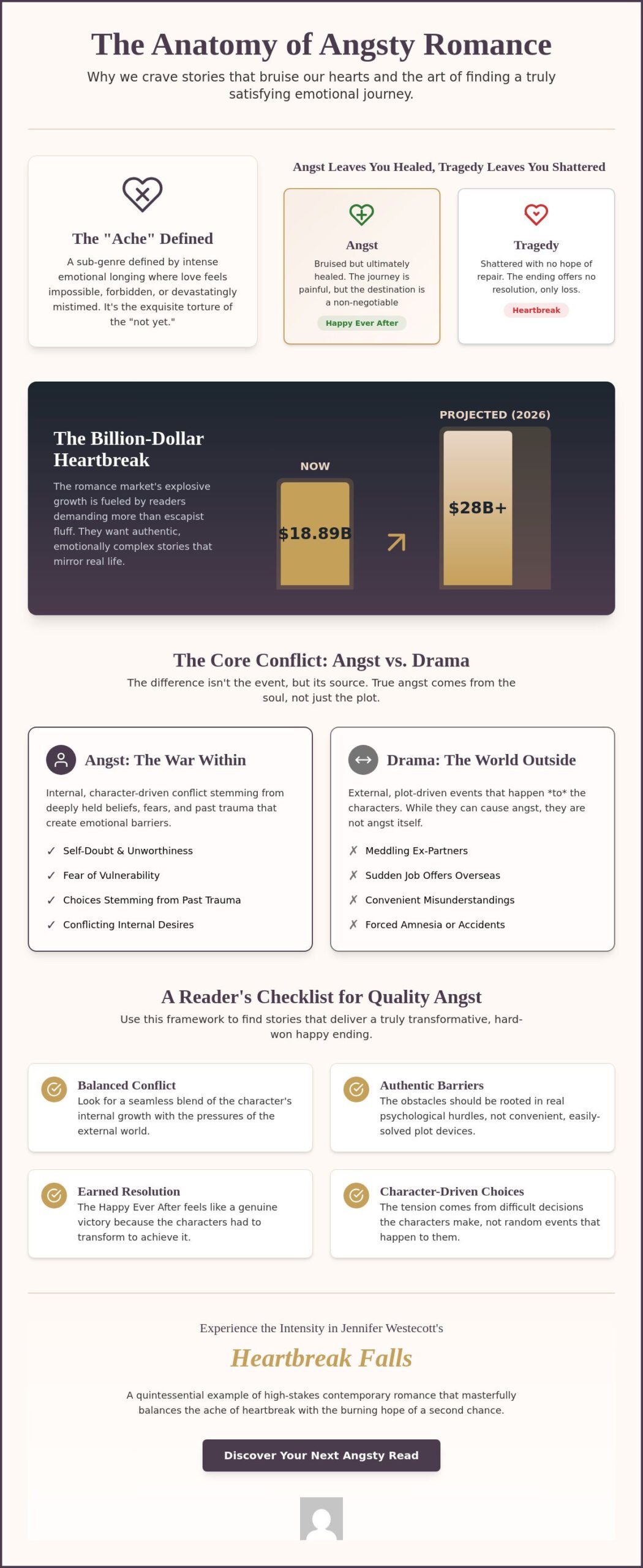
You likely agree that there’s nothing more frustrating than an emotionally shallow story or drama that feels forced rather than earned. You want high-stakes contemporary romance that mirrors the messy, beautiful reality of human connection. We’re going to dive into the psychological allure of the emotional ache and give you a framework for finding stories that provide a perfect emotional purge. You’ll learn how to distinguish between hollow conflict and the deep tension that makes a happy ending feel inevitable. We’ll also look at the rising trends in the $18.89 billion romance market and highlight authors who masterfully balance heartbreak with the hope you crave.
Key Takeaways
- Decode the psychological pull of “the ache” and why we find profound satisfaction in the tension of a slow-burn emotional journey.
- Master the art of identifying high-quality angsty romance novels by looking for a seamless blend of internal character growth and external pressure.
- Discover the specific narrative engines behind your favorite heart-shredding tropes, from forbidden connections to the weight of second chances.
- Apply a simple framework to avoid forced drama and find stories that offer a truly transformative, hard-won happy ending.
- Explore how these elements come together in Jennifer Westecott’s Heartbreak Falls, a quintessential example of high-stakes contemporary romance.
What Are Angsty Romance Novels? Understanding the Allure of ‘The Ache’
At its core, the appeal of angsty romance novels lies in the exquisite torture of the “not yet.” While the broader romance novel genre encompasses everything from sun-drenched rom-coms to high-stakes adventures, angst occupies a shadowed, deeply resonant corner of the heart. These stories don’t just focus on the attraction between two people; they dwell in the spaces where that attraction feels impossible, forbidden, or devastatingly mistimed. It’s a sub-genre defined by intense emotional longing and conflicts that feel like life or death to the characters involved.
Readers often describe a physical sensation when reading these books, commonly known as “the ache.” It’s that hollow feeling in your chest when a hero walks away, or the sharp intake of breath when a heroine finally admits a truth she’s been hiding for years. This tension isn’t meant to be painful for the sake of pain. Instead, it’s a pleasurable delay of gratification. The longer the characters struggle, the more we lean into the narrative, waiting for the moment the pressure finally breaks.
It’s vital to distinguish this emotional intensity from tragedy. In the world of high-stakes romance, a Happy Ever After (HEA) is non-negotiable. Tragedy leaves you shattered with no hope of repair; angst leaves you bruised but ultimately healed. By July 2026, the romance market is projected to continue its massive climb toward a $28 billion valuation. This growth is fueled by readers who are moving away from escapist fluff. They want stories that feel “real,” reflecting the complex internal battles we all face in our own connections.
The Psychology of the Emotional Purge
Why do we choose to cry over fictional people? The answer is catharsis. Engaging with angsty romance novels provides a safe, controlled environment for an emotional purge. We can experience the heights of heartbreak and the depths of longing without any real-world consequences. This process of “earning” the light by first walking through the dark is why emotionally intense romance books continue to dominate reader discussions. When the couple finally finds their way back to each other, the payoff feels earned, transformative, and infinitely more satisfying than a love that never had to fight to exist.
Angst vs. Drama: Spotting the Difference
It’s easy to confuse angst with simple drama, but the difference lies in the source of the conflict. Drama is usually external. It’s the car crash, the meddling ex-partner, or the sudden job offer in another city. These are things that happen to the characters. Angst, however, is the internal reaction to those events. It’s the character-driven choices, the self-doubt, and the deeply held beliefs that keep two people apart even when they’re standing in the same room. True angst comes from the soul, not the plot points.
Angst is the emotional friction between two souls who believe they cannot be together.
The Anatomy of Emotional Tension: Internal vs. External Conflict
Tension in a love story isn’t just about what happens. It’s about why it hurts. The most compelling angsty romance novels operate on two primary engines: internal struggle and external pressure. When these forces collide, they create a narrative friction that keeps readers turning pages late into the night. By 2026, audience preferences have shifted away from “forced” drama like sudden amnesia or convenient misunderstandings. Readers now crave authenticity. They want to see characters grapple with real psychological barriers that make a happy ending feel like a hard-won victory. This delicate equilibrium is the hallmark of romance novels with deep emotional conflict.
Internal Angst: The War Within
The most devastating conflicts are often the ones we carry inside. Internal angst is the quiet, persistent voice that tells a character they are unlovable or that vulnerability is a death sentence. This “internal ghost” usually stems from past trauma or a profound sense of unworthiness. It creates a barrier that no amount of external affection can easily break. We see this play out when a character faces an impossible choice. Perhaps they must choose between a long-held identity that keeps them safe and a love that requires them to be seen. It’s the fear of being truly known and found wanting. If you’re looking for a story that masters this internal battle, you might want to explore our latest high-stakes releases.
External Angst: The World Against Us
While internal conflict provides the depth, external conflict provides the stakes. These are the barriers the world builds between two people who belong together. Classic tropes like forbidden dynamics, societal expectations, or professional boundaries create a sense of urgency. When a character’s career or reputation is on the line, the emotional weight of every secret glance increases tenfold. Timing also plays a massive role here. The “right person, wrong time” scenario is a powerful driver of external angst. It forces the couple to fight not just their own fears, but the very clock of their lives. The best stories ensure these external pressures aren’t just obstacles; they are mirrors that force the characters to confront their internal weaknesses.
Common Tropes That Define the Angsty Romance Genre
In the world of angsty romance novels, tropes are far more than just repetitive plot devices. Think of them as the skeleton of the story; they provide the necessary structure and support. However, the emotional depth is the soul. It’s the raw, bleeding heartbeat that transforms a familiar setup into a transformative experience. These tropes work because they tap into universal fears: the fear of being too late, the fear of being caught, or the fear of being seen. They create a playground for high-stakes emotions where every choice feels heavy with consequence.
Second Chance Romance: The Weight of History
There is a specific, sharp kind of pain found in the “one that got away” returning years later. Second chance romance relies on the crushing weight of history. It isn’t just about a new spark; it’s about the ashes of an old fire that never quite went out. We see themes of profound regret and the terrifying possibility of repeating past mistakes. Readers love this trope because shared history acts as a shortcut to emotional intensity. You don’t need three hundred pages to establish a bond when the characters already carry a decade of secrets and scars between them. The angst comes from the growth that happened apart and the question of whether they can ever truly fit together again.
Forbidden Love and Impossible Choices
The tension of “the one I shouldn’t want” is a cornerstone of the genre. Whether it’s a rival, a boss, or someone tied to a painful past, the forbidden element adds a layer of constant, low-level anxiety. Secrets fuel this fire. Every stolen glance or hushed conversation carries the threat of discovery, making the stakes feel immediate and dangerous. This trope forces characters to make impossible choices between their hearts and their obligations. Many contemporary love story books thrive in these boundaries, exploring how passion can survive when the entire world says it shouldn’t.
Enemies to Lovers: The Thin Line Between Hate and Love
The friction of genuine dislike is a perfect breeding ground for angst. In an enemies-to-lovers arc, the “slow burn” isn’t just about physical distance; it’s about the mental barriers characters build to protect themselves. They fight their own feelings as much as they fight each other. The true emotional peak occurs during the shift from hostility to vulnerability. Admitting love for an adversary requires a total dismantling of one’s ego. It’s that moment of realization, where the person you vowed to despise becomes the only one who truly understands you, that provides the ultimate emotional payoff.
How to Spot High-Quality Angst: A Reader’s Checklist
Not all tears are created equal. We have all been there: holding a book where the characters are miserable for no reason other than to pad the page count. This is often called “manipulative angst,” and it’s the primary reason some readers shy away from the sub-genre entirely. High-quality angsty romance novels don’t just aim to make you cry; they aim to make you understand why the characters are crying. To find stories that truly resonate, you must look for the “why” behind the pain. When the emotional stakes are rooted in deep character history rather than convenient plot twists, the eventual resolution feels like a profound relief rather than a simple ending.
Distinguishing between toxic behavior and complex character flaws is the first step in your checklist. A high-quality read features characters who are messy and hurting, but their actions should stem from a place of internal logic. If a character pushes someone away, is it because they’re being “difficult,” or is it because their past has taught them that staying close is dangerous? Resonant angst is built on these layers of truth. It’s about the struggle to be better, even when it’s terrifyingly hard.
Earned Conflict vs. Forced Miscommunication
The “big misunderstanding” is the ultimate test for any emotional narrative. It feels cheap when a conflict could be solved with a single five-minute conversation that the characters simply refuse to have for no reason. Earned angst, however, involves conflicts that communication alone cannot fix. These are barriers built on deep-seated beliefs, cultural clashes, or traumatic histories. When a character’s core identity is at odds with their desire for the other person, you’ve found a story with genuine depth. This is the kind of friction that makes a happy ending feel transformative.
The Role of Vulnerability and Trust
Look for moments where the characters are forced to be emotionally “naked.” True high-stakes romance requires a dismantling of the walls we build to protect ourselves. A satisfying arc doesn’t offer instant forgiveness after a betrayal or a mistake. Instead, it shows the slow, painful process of rebuilding trust. Trust isn’t a light switch; it’s a slow-burning candle that can be extinguished by a single breath. Seeing characters navigate this delicate process provides a much more satisfying emotional payoff for the reader. If you want to see this level of emotional depth in action, browse our collection of masterfully crafted stories to find your next favorite read.
Experience the Intensity: Why ‘Heartbreak Falls’ is the Ultimate Angsty Read
Jennifer Westecott understands that the best stories don’t just tell you about love. They make you feel the cost of it. Released on August 26, 2023, Heartbreak Falls stands as a definitive masterclass in high-stakes contemporary romance. It captures the very essence of why we seek out angsty romance novels. This narrative doesn’t shy away from the jagged edges of human connection. It’s visceral. It’s raw. The story dives headfirst into the messy, beautiful reality of people who are desperate to be together but are held back by the suffocating weight of their own history. The tension is real. The stakes are everything.
Passion, Choice, and the Westecott Style
The Westecott style is defined by an evocative, sensory approach to storytelling that makes every character’s pain feel immediate. You don’t just read about a character’s grief; you feel the sudden coldness in the room and the static in the air when a secret is finally revealed. This book masterfully explores the razor-thin line between burning passion and the cold reality of regret. It centers on an impossible choice that resonates deeply with modern adult readers who understand that love isn’t always enough to bridge a gap. It’s a choice between the safe, quiet life they’ve built and the terrifying, loud vulnerability of a second chance. This isn’t just drama for the sake of a plot twist. It’s a character-driven exploration of what happens when two souls are forced to confront the ghosts they thought they’d left behind.
Start Your Journey with a Free Sample
We invite you to experience this emotional journey firsthand and discover why readers are captivated by this world. You don’t have to take our word for the intensity. You can test the ache yourself. By engaging with the opening chapters, you’ll connect with characters who feel as real as the people in your own life. It’s an intimate invitation to step into a narrative where the happy ending is fought for with every single breath. This is your chance to see if you can handle the heat before the heartbreak truly begins. Are you ready to find out what happens when the past finally catches up? Don’t wait for the resolution to find you.
Download your Free Sample Chapter of Heartbreak Falls here.
Embrace the Ache and Find Your Next Great Love Story
The journey through the shadowed valleys of the heart isn’t just about the tears we shed. It’s about the transformative power of a love that survives the impossible. We’ve explored how the best angsty romance novels use the friction of internal ghosts and external barriers to create a narrative that feels both raw and inevitable. By looking for earned conflict and deep vulnerability, you can find stories that provide a truly satisfying emotional purge rather than just shallow drama.
You deserve a story that doesn’t pull its punches. Described by readers as a masterclass in emotional tension, Jennifer Westecott’s Heartbreak Falls explores the raw reality of impossible choices and the thin line between passion and regret. If you’re ready to feel every beat of a hard-won happy ending, free sample chapters are available for immediate download. You can Begin the emotional journey with a Free Sample of Heartbreak Falls today. Discover for yourself why the most difficult paths often lead to the most beautiful destinations. Your next favorite heart-shredding read is waiting for you.
Frequently Asked Questions
What is the difference between an angsty romance and a sad romance?
An angsty romance focuses on the internal and external friction that keeps characters apart, while a sad romance often centers on the grief of a tragic situation. In angst, the pain comes from the longing and the obstacles preventing a connection. Sadness is an emotion, but angst is a narrative engine driven by high-stakes decisions and the “ache” of the unknown. It’s the difference between mourning a loss and fighting for a future.
Does an angsty romance novel always have a happy ending?
Yes, a true romance novel must have a Happily Ever After (HEA) or a Happy For Now (HFN). While the journey through angsty romance novels can be bruising and emotionally taxing, the payoff is the certainty of a resolution. Without that guaranteed light at the end of the tunnel, the story falls into the category of tragedy or general fiction rather than romance. The angst makes the ending feel earned.
Why do I enjoy reading books that make me feel anxious or sad?
Readers enjoy these stories because they provide a safe space for catharsis. Experiencing intense fictional emotions allows for a healthy emotional purge without any real-world consequences. The anxiety felt during the “ache” of the story makes the eventual relief of the ending feel significantly more powerful. It’s about the contrast. The deeper the valley of the struggle, the higher the peak of the resolution feels when it finally arrives.
What are the best tropes for someone new to angsty romance?
Second chance romance and enemies to lovers are excellent entry points for new readers. These tropes provide built-in history or immediate conflict that fuels the emotional fire. They offer a clear framework for why the characters are hurting, making the angst feel grounded and earned. These setups naturally create a high-stakes environment where every interaction is loaded with subtext, hidden longing, and the fear of being vulnerable.
Can a “slow burn” romance also be considered angsty?
Absolutely, a slow burn is often the perfect vehicle for angst. The prolonged delay of physical or emotional intimacy creates a simmering tension that builds over hundreds of pages. In many angsty romance novels, the burn is slow because the characters are fighting their own internal ghosts or external barriers. This steady accumulation of desire and restraint is exactly what creates the delicious emotional ache that keeps readers turning pages late at night.
How do I find angsty romance novels that aren’t toxic?
Look for stories where the conflict stems from character growth and internal logic rather than manipulation or cruelty. High-quality angst focuses on “the why” behind a character’s pain. Seek out authors who prioritize communication as a goal, even if it’s a difficult one to reach. Reading reviews that mention earned emotional payoffs or complex character development can help you distinguish resonant angst from toxic dynamics that lack narrative depth.
What makes Jennifer Westecott’s “Heartbreak Falls” an angsty read?
Jennifer Westecott’s Heartbreak Falls is a quintessential angsty read because it centers on an impossible choice between safety and vulnerability. The second-chance dynamic ensures that every scene is heavy with the weight of shared history and past mistakes. It focuses on the internal war the characters fight against their own fears of being hurt again. This creates a high-stakes atmosphere where the emotional stakes feel deeply personal and the resolution feels transformative.
Is “angst” just another word for “drama” in romance fiction?
No, they are distinct narrative elements. Drama refers to the external events that happen to characters, such as a sudden job loss or an accident. Angst is the internal, emotional reaction to those events. It’s the psychological friction and the soul-deep struggle of a character trying to navigate their feelings. While drama provides the plot, angst provides the heart and the resonant tension that makes a contemporary love story feel real.